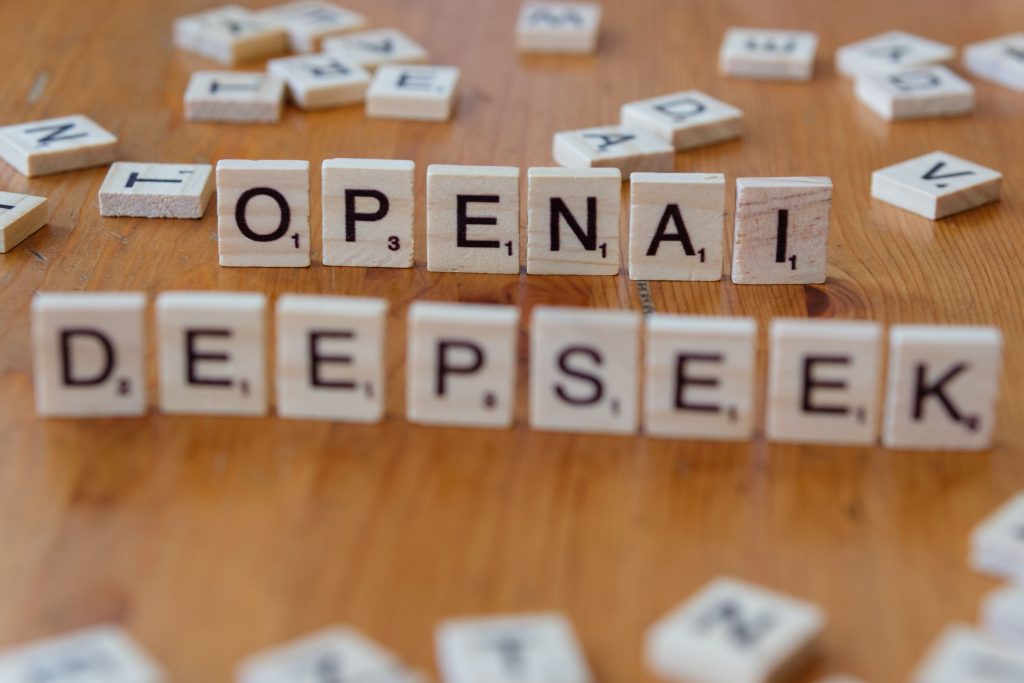

The Evolution of AI Models and the Rising Need for Data Center Infrastructure
In recent developments within the artificial intelligence community, models like Qwen 3.8 27B and Deepseek V4 Flash are challenging traditional perceptions of large-scale AI models. Their emergence suggests that the era of exponentially large, trillion-parameter models requiring hundreds of thousands to millions of dollars in compute resources may not be the only path forward.
Rethinking the Necessity of Massive Models
Historically, the AI industry has celebrated the achievements of monumental models—such as GPT-3, with its hundreds of billions of parameters—under the assumption that increasing model size directly correlates with performance improvements. However, the advancement of more efficient architectures and training techniques indicates a paradigm shift. Smaller yet optimized models like Qwen 3.8 27B and Deepseek V4 Flash demonstrate competitive capabilities while demanding significantly less computational expenditure for deployment.
These models exemplify that high-performance AI solutions are achievable at a fraction of the cost typically associated with large model deployment. This revelation is essential for organizations seeking scalable, practical AI solutions without the prohibitive infrastructure investments traditionally required.
Balance Between Training and Deployment Costs
While training large models still necessitates substantial hardware resources, the operational expenses—particularly inference costs—are considerably reduced with streamlined models. This shift has implications beyond individual research labs, extending to businesses aiming for cost-efficient AI integration. Smaller, optimized models can deliver swift, accurate results without the need for extensive data center infrastructure.
Implications for Different Stakeholders
Models such as GLM 5.3 further exemplify this trend. Although they may serve more targeted applications, their relatively modest resource demands make them attractive options for small enterprises and startups. As AI technology matures, it becomes more accessible to organizations with limited infrastructure.
Moreover, the development of models like Qwen 3.8 120B with Mixture of Experts (MoE) configurations presents new opportunities. Such models can offer high performance tailored for commercial use, enabling businesses to deploy sophisticated AI without the exorbitant costs previously associated with large-scale models.
The Future of Data Center Infrastructure
Given these advancements, the question arises: Why are we still investing heavily in building expansive data centers? The answer lies in the ongoing necessity for training, fine-tuning, and supporting the deployment of these efficient, smaller models at scale. While the trend toward smaller, more efficient models reduces some of the hardware burdens, a robust data infrastructure remains essential for scalable AI operations, R&D, and enterprise deployment.
As AI continues to evolve, the focus may shift from constructing ever-larger models to enhancing the efficiency, accessibility, and practical deployment of models suited for diverse applications. This evolution underscores a move toward more sustainable, cost-effective AI infrastructure—balancing the need for powerful computation with economic and operational feasibility.
Conclusion
The trajectory set by models like Qwen 3.8 27B and Deepseek V4 Flash signals a transformative era in artificial intelligence—one where massive models are no longer the only viable solution. As the AI ecosystem embraces these more efficient approaches, the future will likely see a recalibration of data center investments, emphasizing smarter infrastructure that supports a broader spectrum of AI applications.
